Search is changing. Optimize your site so ChatGPT, Perplexity, and Gemini cite your brand as the top answer to user queries.
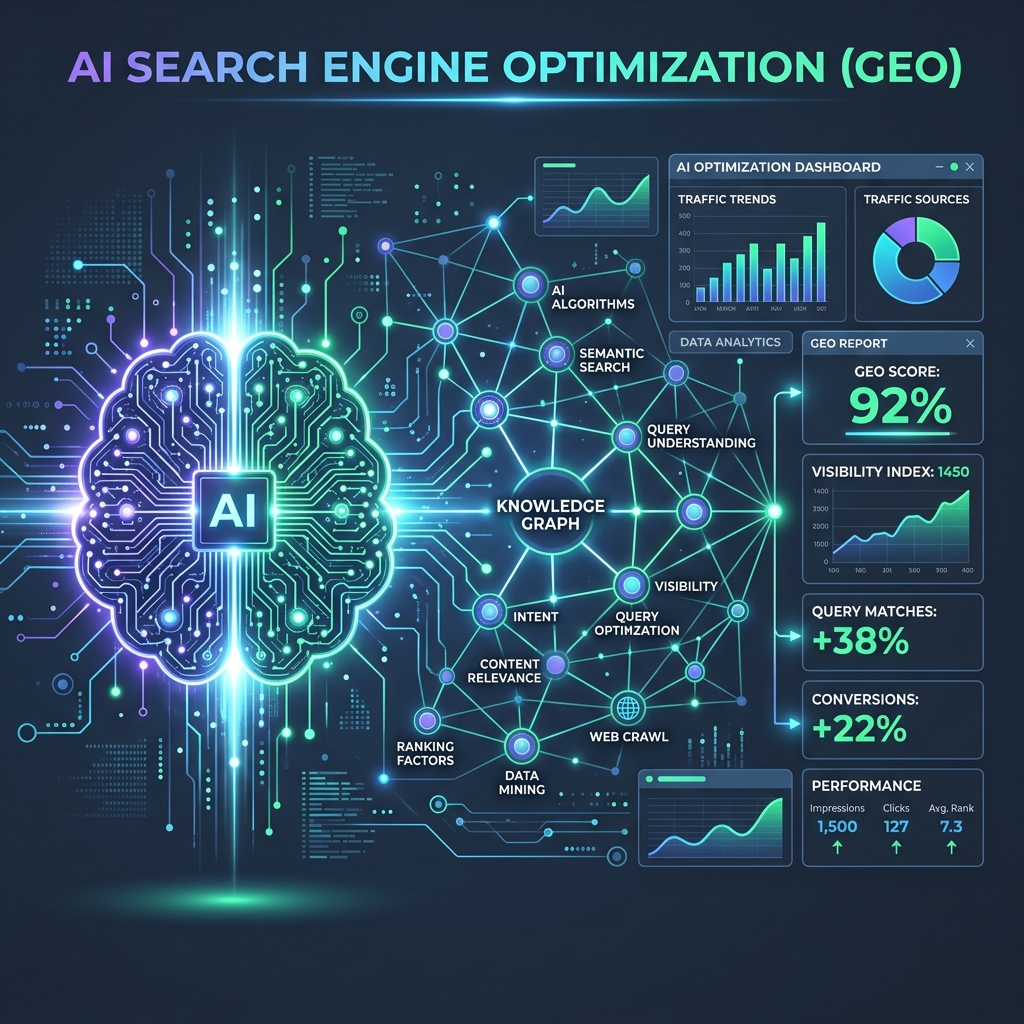
Search is changing. Millions of users are switching from standard Google keyword searches to conversational AI assistants like ChatGPT, Perplexity, Gemini, and Claude. If your business is not cited by these AI engines when users ask for recommendations, you are missing out on the fastest-growing source of organic traffic. This is the practice of Generative Engine Optimization (GEO).
1. What is Generative Engine Optimization (GEO)?
GEO is the process of optimizing website content, structure, and authority so that LLM (Large Language Model) search engines cite your brand, products, or services as the top answer to user prompts. Unlike traditional SEO which focuses on meta-tags and keyword density, GEO focuses on information density, credibility, and clear entity relationships.
2. The Core Pillars of GEO Success
To rank in AI search engines, you must align your site design with how AI crawlers digest information:
- High Information Density: AI models summarize. If your page is full of generic marketing fluff, it will be ignored. Write clear, direct, and fact-dense copy that directly answers user queries.
- Structured Schema Markup (JSON-LD): AI crawlers use schemas to build knowledge graphs. Properly structuring your SEO schemas (like Organization, LocalBusiness, and Service) helps AI models connect your brand name to specific services.
- Q&A Format & FAQs: AI engines often answer user prompts by matching them to questions and answers. Structuring content in a clear H2 question followed by a direct paragraph answer is highly effective.
- Brand Citations and Backlinks: LLMs verify their findings by looking at off-page authority. Having your brand mentioned on third-party sites (directories, news portals, blogs) builds the "trust score" the AI needs to cite you.
3. How to Optimize Your Pages Today
Start by identifying the conversational queries your clients might ask. For example, instead of searching "software development agency," a user might ask ChatGPT: "What is the best custom product engineering studio in India with fast delivery?". To rank for this prompt, your homepage must explicitly state your delivery timeline, focus areas, and geographic delivery capabilities, backed by structured metadata.
4. JSON-LD Schema Engineering for LLM Indexes
AI search crawlers compile data from websites to build complex entity graphs. While traditional Google crawler parsing is flexible, AI data loaders (like LlamaIndex or LangChain document loaders) parse structural metadata first. To feed these crawlers the correct information, your website must implement deep JSON-LD schemas. These schemas should not only cover basic organization details but list your specific services, physical operational regions, target countries (via the areaServed schema key), and pricing models. At GoPra Lab, we implement international SEO structures directly into our client layout files, ensuring search bots map our clients' brands correctly.
5. Building Domain Authority & Citation Velocity
LLMs verify the accuracy of their recommendations by checking third-party credibility. An AI agent will not cite your company as a top provider unless it finds your brand mentioned across high-authority directories, PR portals, and tech blogs. This off-page trust is known as citation velocity. To rank #1 in AI recommendations, you must focus on obtaining directory listings (on portals like Clutch.co, G2, or GoodFirms) and regional backlinks from reputable technology sites. This proves to the LLM's training dataset and real-time web crawlers that your business is a trusted entity.
6. Traditional SEO vs. Generative Engine Optimization (GEO)
Understanding the shift from traditional keywords to AI context search is essential for future-proofing your business. Here is a brief comparison of how these optimization playbooks compare:
| Strategy Aspect | Traditional SEO (Google Search) | Generative Engine Optimization (ChatGPT, Perplexity) |
|---|---|---|
| Core Focus | Keyword matching and page authority | Information density, context relevance, entity trust |
| Content Style | Long-form copy with targeted keyword density | Fact-dense, direct, Q&A structured formats |
| Metadata | HTML Title and meta descriptions tags | JSON-LD Schemas, tables, bullet points, and source quotes |
| Off-Page Signals | Link authority (PageRank) and quantity of backlinks | Third-party mentions, directory ratings, and citation context |
To capture B2B organic traffic over the next decade, businesses must adapt. Partner with GoPra Lab to design and implement optimized search structures using our expert Growth Marketing & SEO and custom AI Solutions.